What is a stereo microscope?
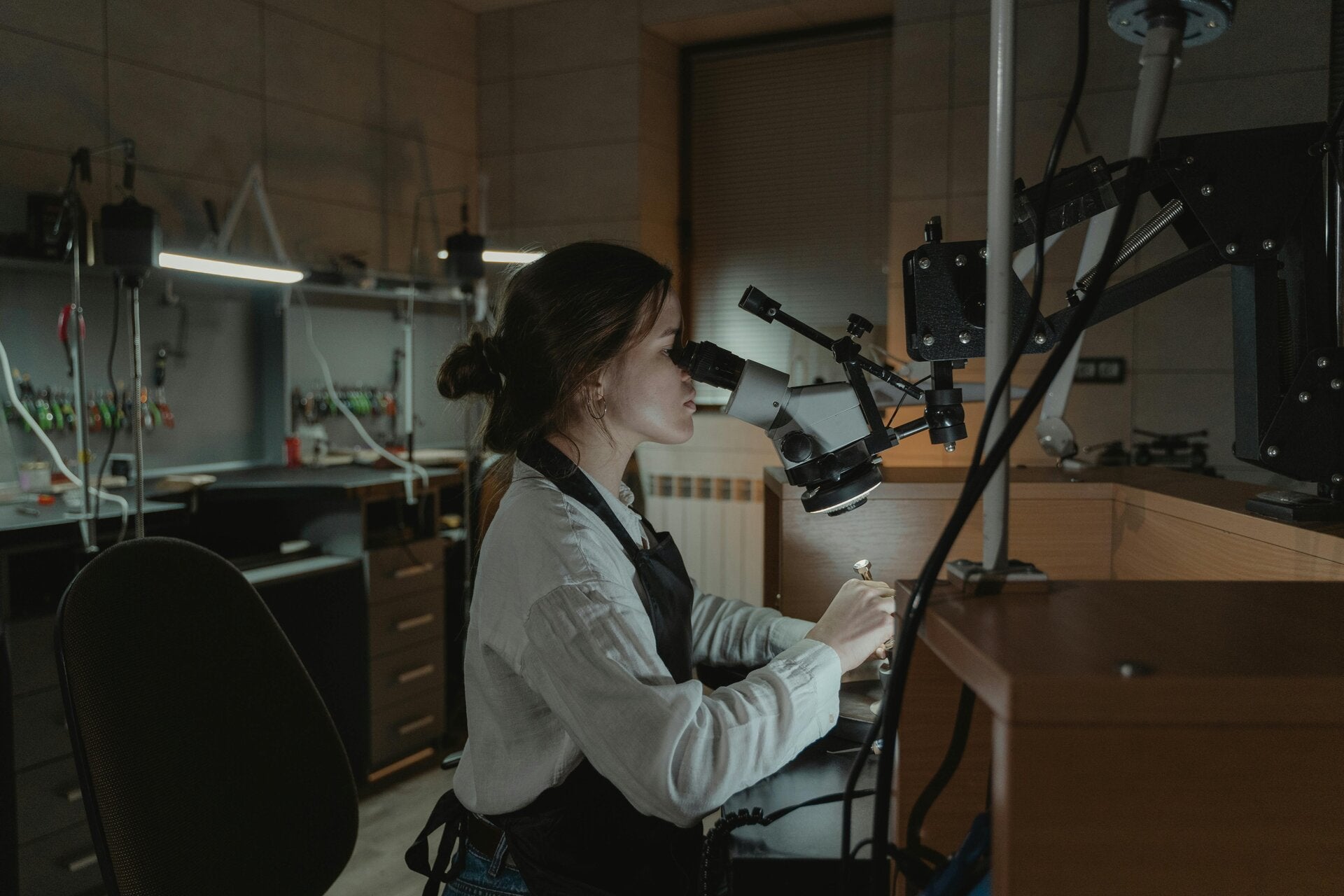
Discover the world of stereo microscopy. Learn more about the applications and advantages of this type of microscope. Perfect for hobbyists and professionals who want to study surface structures.
Surface structures in detail
Stereo microscopes are primarily designed for studying and inspecting surface structures. Think of flowers, stamps, minerals, electronic components and diamonds. Incident light is essential here, although transmitted light can sometimes also come in handy.
The advantages of stereo microscopes
Unlike biological microscopes, a stereo microscope gives an upright image. They generally have a lower magnification, but offer a greater working distance, which simplifies working with the microscope. Available with fixed, multiple or zoom magnifications.
Applications of stereo microscopes
- Mineralogy: research into the composition of minerals and rocks.
- Metallurgy: measuring the mechanical and electrical properties and corrosion resistance of metals.
- Forensic research: analysis of organic and inorganic materials.
- Morphology: studying the shape and characteristics of bacteria.
- Geology: research into the history of the earth and the climate.
- Materials research: examination of metals, plastics, minerals, etc.
- Archaeology: identification of traces on found objects.